
Only these two values change behavior. Anything else is read as an unrecognized
setting and falls back to
mage — there is no third backend.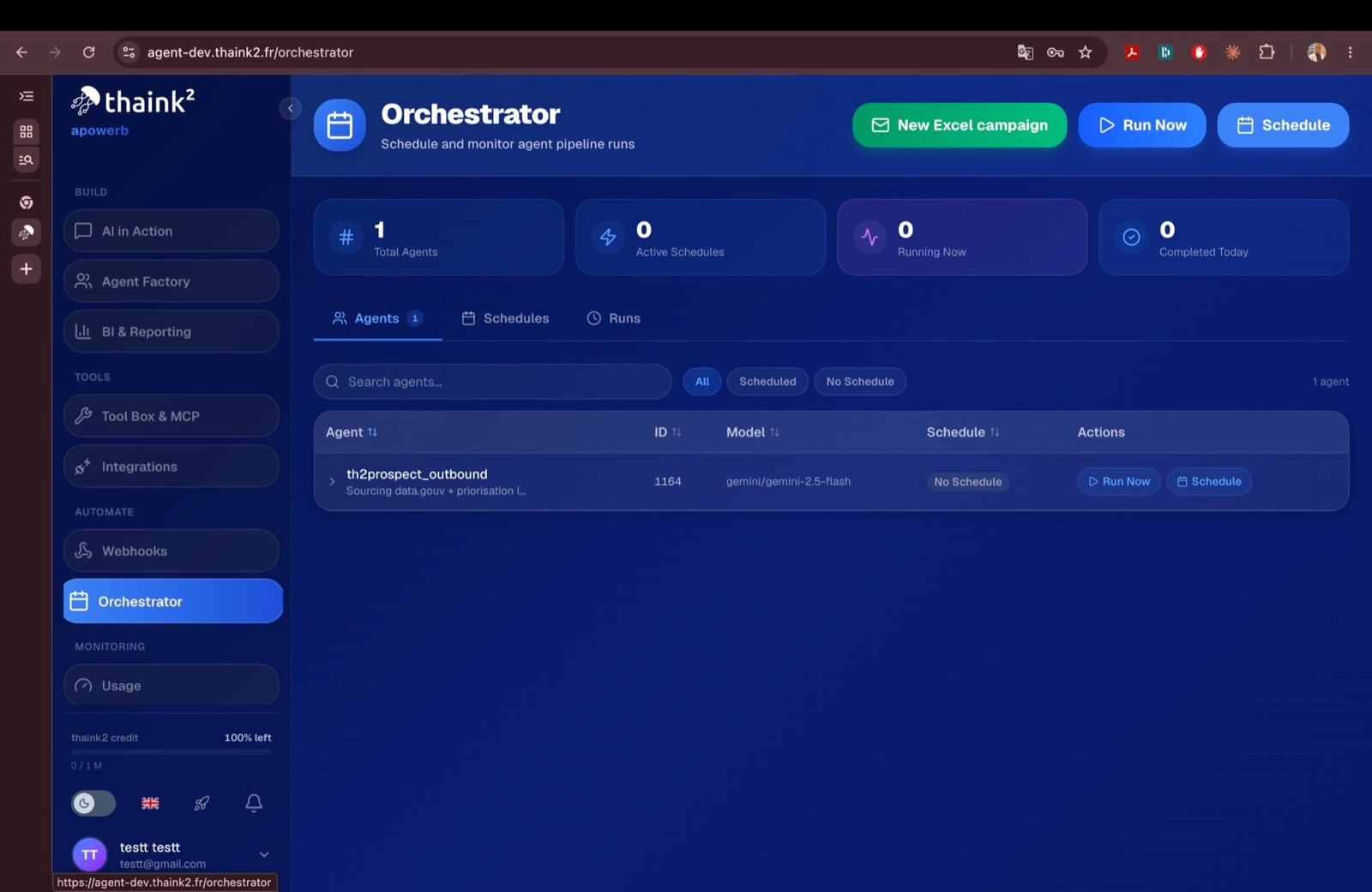
The orchestrator screen: one row per agent, with its model, its schedule and a manual trigger.
Scheduling a run
Interval shortcuts
Mage accepts the
@interval shortcuts directly. The th2etl client translates them into
five-field cron expressions before creating the trigger, so the same request body works
against either backend.
Managing schedules and runs
The endpoints keep the
pipelines naming from the Mage era. They are orchestrator
agnostic: the same calls reach th2etl when the flag is set.
What changes between the two
The mapping matters if you inspect the orchestrator directly rather than through this API.Identifiers are opaque to callers — read one from a listing and pass it back. Do not
compare them numerically: Mage ids are integers while th2etl uses names, and a
numeric comparison against a th2etl id silently fails to match.
Configuration
See Configuration for the variables each orchestrator needs. WhenORCHESTRATOR is unset, the server talks to Mage — so a deployment that means to use
th2etl must set it explicitly.